Minneapolis Google Maps SEO That Drives Actual Revenue
Turning map visibility into measurable foot traffic.
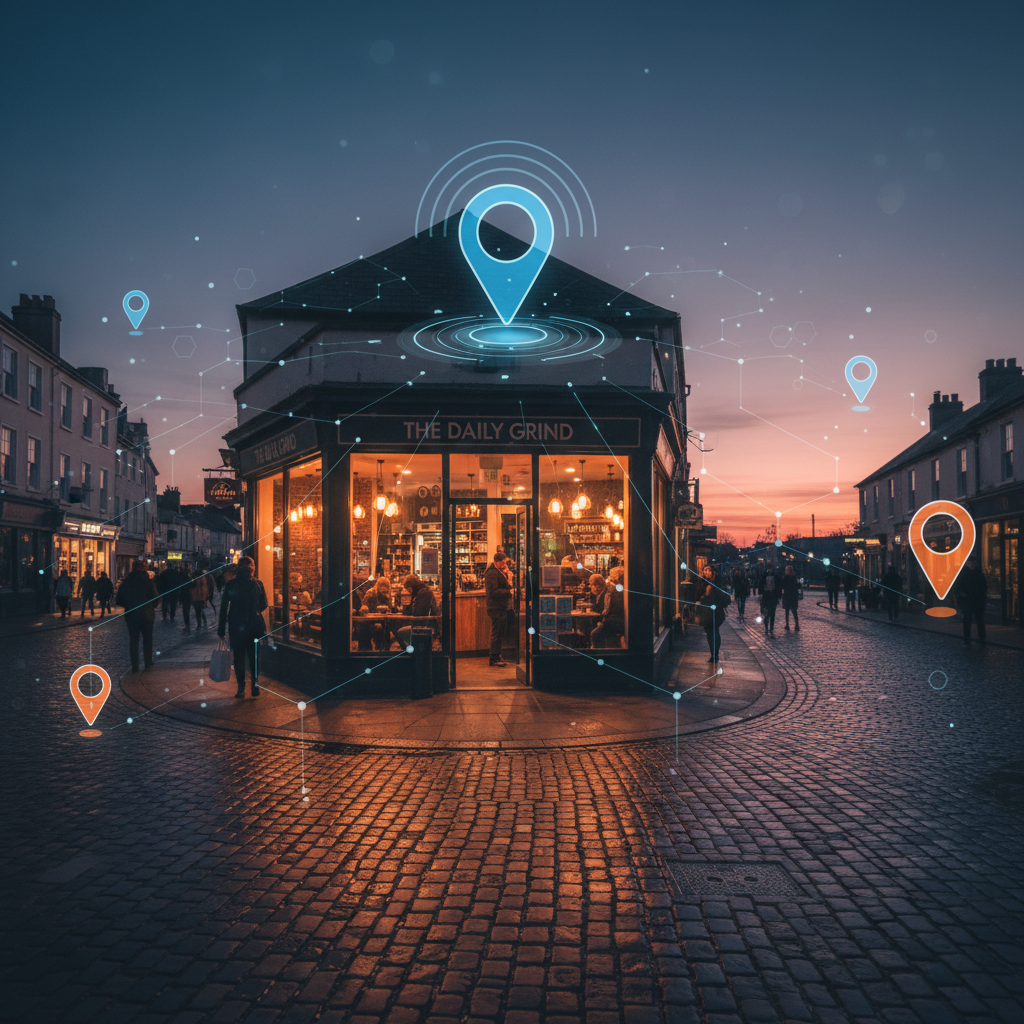
Ranking high on a tracking grid means nothing if the phone stays quiet. We engineer precise local signals to dominate the Google Local Pack across Minneapolis and St. Petersburg, turning map visibility into measurable foot traffic and inbound calls.
Data-Driven Local Signals That Force Google to Notice You

📍 Geogrid Heat Map Tracking
Stop guessing where you rank. We track your exact visibility across specific Minneapolis neighborhoods block by block, showing exactly where you dominate and where competitors steal your leads.
⚙️ GBP Entity Optimization
Your Google Business Profile requires precise category mapping. We structure your primary and secondary categories, service areas, and attributes to match exactly what Google’s local algorithm expects for your industry.
📊 Hyper-Local Citation Audits
Inconsistent NAP (Name, Address, Phone) data destroys local trust. We manually audit and correct your existing directory listings across Tier 1 data aggregators to establish unshakeable local authority.
⭐ Review Velocity Management
A sudden spike in reviews triggers spam filters. We implement a calculated review generation protocol that builds steady, legitimate social proof from real Minneapolis and St. Petersburg customers.
📈 Conversion Action Tracking
Traffic without revenue is a vanity metric. We implement call tracking and UTM parameters on your GBP links so you know exactly how many booked appointments originated from your Maps presence.
Live Heat Map Results from Minneapolis Businesses

HVAC Contractor, South Minneapolis
Before: Invisible outside a 2-mile radius of their shop, averaging 12 GBP calls monthly.
After: Dominated a 10-mile geogrid, generating 84 tracked inbound calls per month.
⏱ 120 days
Personal Injury Firm, Downtown Minneapolis
Before: Stuck in positions 4 to 7 for car accident lawyer, losing high-value cases to larger firms.
After: Secured the #2 spot in the Local Pack, resulting in a 310% increase in direct direction requests.
⏱ 6 months
Dental Clinic, St. Petersburg
Before: Zero visibility for emergency dentist queries due to poor primary category selection.
After: Captured the #1 map ranking for emergency queries, adding 22 new emergency patient bookings monthly.
⏱ 90 days
The 3-Phase Maps Domination Protocol
1
Map Your Current Baseline
We run a 13×13 geogrid report centered on your physical location. This reveals your exact ranking position for high-intent keywords across every square mile of your service area.
2
Fix the Foundation
We correct NAP inconsistencies, optimize your GBP categories, and strip out keyword stuffing that puts your listing at risk of a hard suspension.
3
Inject Local Relevance
We build hyper-local citations, publish geo-tagged GBP updates, and establish proximity signals that prove to Google you are the most relevant answer in Minneapolis.

Why We Only Engineer Local SEO for Minneapolis and St. Petersburg
I am Renante Usa. When I started analyzing local search algorithms, I noticed a massive disconnect between what SEO agencies promised and what Main Street business owners actually needed. Agencies sold rankings and traffic. Plumbers, roofers, and dentists needed phone calls, booked appointments, and revenue.
That realization changed everything about how we operate at Local Map SEO Experts. We stopped looking at national search volume and started obsessing over local proximity signals. We realized that ranking #1 in a suburb 20 miles away is useless if a competitor is stealing all the foot traffic right across the street from your Minneapolis storefront.
We focus exclusively on the Minneapolis and St. Petersburg markets because local SEO requires deep geographic understanding. You cannot fake local relevance. Knowing the difference between search intent in Uptown versus Northeast Minneapolis allows us to build citation networks and local links that out-of-state agencies simply cannot replicate.
We do not sell magic algorithms or secret backlink formulas. We execute precise, data-driven local signals. We track your visibility on a hyper-local heat map, optimize your Google Business Profile to exact specifications, and measure our success by the number of times your phone rings. If a strategy does not directly increase your revenue, we do not deploy it.
Frequently Asked Questions
How long does it take to move from position 5 to the top 3 in the Local Pack?
Moving into the top 3 usually takes 60 to 120 days, depending on your starting citation health and competitor density in Minneapolis. We focus on fixing foundational NAP errors first, which often yields movement within the first 4 weeks.
Will adding keywords to my Google Business Profile name help me rank faster?
Stuffing keywords into your business name violates Google guidelines and puts your profile at high risk for a hard suspension. We focus on optimizing your primary and secondary categories, which drives relevance without risking your entire maps presence.
Why do I rank #1 at my office but disappear two miles down the road?
Google relies heavily on proximity to the searcher. To expand your ranking radius across St. Petersburg or Minneapolis, we have to build stronger local relevance signals and geo-specific citations that overpower the distance factor.
Do you guarantee a #1 ranking on Google Maps?
No one can guarantee a #1 ranking because Google constantly updates its local algorithm. We guarantee a transparent, data-driven process that historically increases local visibility, inbound calls, and direction requests for our clients.
Stop Losing Local Customers to Inferior Competitors
Get a completely transparent 13×13 geogrid analysis of your current Google Maps visibility in Minneapolis. See exactly where you stand and what it takes to capture the local pack.
Written & Reviewed By
Renante Usa
Local SEO specialist Our Expert Strategy helps boost …
Renante Usa is a dedicated Local SEO specialist with a proven track record of helping businesses enhance their digital presence and dominate local search results. With extensive experience in the search engine optimization industry, Renante specializes in crafting expert strategies designed to boost visibility and drive targeted traffic to local enterprises. His approach combines technical proficiency with a deep understanding of local map algorithms, ensuring that clients not only rank higher but also connect effectively with their immediate communities. As a key contributor to localmapseoexperts.com, Renante leverages his expertise to demystify complex SEO concepts, providing actionable insights that empower business owners to achieve sustainable growth. Throughout his career, he has remained committed to staying ahead of search engine trends and algorithm updates, maintaining a focus on high-impact results. Renante is widely recognized for his analytical mindset and his ability to translate data into successful marketing campaigns. He is deeply passionate about helping small and medium-sized businesses thrive in an increasingly competitive digital landscape by unlocking the full potential of local search.
Latest from Our Blog

How to Feed Google the Trust Signals That Actually Turn a Map Pin Into a Real Business
How to Feed Google the Trust Signals That Actually Turn a Map Pin Into a Real Business For years, local…

Why Your Name and Address Typos Are Basically a Gift to Your Competitors
Why Your Name and Address Typos Are Basically a Gift to Your Competitors If you are a local business owner…
The One Checklist That Actually Finds Your Missing Google Maps Listing
The One Checklist That Actually Finds Your Missing Google Maps Listing There is a specific kind of “stomach-drop” moment that…